Brake noise can be unsettling. Since opening in 2020, our team has inspected and serviced thousands of brake systems for drivers throughout Oley and surrounding Berks County communities, and one consistent truth remains: brake noise is rarely random. Whether it starts as a light squeal on a cold Oley morning or suddenly turns into a harsh grinding sound while slowing down on Route 73, it is your vehicle’s way of signaling that something has changed.
At Limitless Auto Center LLC in Oley, PA, brake inspections are something we perform every day. As part of our complete range of professional auto repair and brake services in Oley, PA, we evaluate the entire braking system to ensure safe, reliable stopping performance. As a NAPA AutoCare Center with ASE-Certified technicians, we follow manufacturer standards while taking the time to explain exactly what we are seeing. Every inspection is based on measurable data — not guesswork — and qualifying repairs are backed by a 3-year / 36,000-mile nationwide warranty.
If you are searching for brake repair in Oley, PA, brake pad replacement near Oley, or a trusted brake shop near you, this guide will explain:
- What the different sounds mean
- When it is safe to drive and when it is not
- What commonly causes brake noise in Berks County
- How brake systems are properly diagnosed
- What happens if you wait
- How to protect your vehicle long-term
Brake Squeal vs Grinding: What the Noise Means and How Urgent It Is in Oley, PA
Brake noise is rarely random. It is usually the result of wear, vibration, corrosion, or heat. Sometimes the issue is minor. Other times, it is the early stage of more serious damage.
A common situation we see involves a driver who notices light squealing during morning commutes around Oley but assumes it is just moisture or cold weather. For a week or two, the noise only happens occasionally and disappears after a few stops. Then one afternoon, while slowing from moderate rural speeds, the sound becomes louder and more consistent. By the time the vehicle is inspected, pad thickness is below 2mm and the rotors show measurable scoring.
In many cases like this, addressing the issue when the squeal first became consistent would have meant replacing pads only. Waiting allowed heat and friction to begin damaging the rotor surface. The difference often comes down to timing, not just parts.
Is It Safe to Drive With Squealing or Grinding Brakes?
- Brief squeal only on cold, damp mornings: Often normal surface rust. Monitor.
- Consistent squeal during every stop: Schedule inspection within a few days.
- Vibration, pulsation, or reduced stopping confidence: Inspect soon.
- Grinding noise: Inspect immediately. Continued driving can increase repair cost quickly.
What many drivers don’t realize is that brake performance rarely drops off all at once. Under repeated braking from highway speeds, worn pads and overheated components can gradually increase stopping distance due to heat fade — even before grinding begins, making the change difficult to notice until emergency braking is required. The National Highway Traffic Safety Administration highlights brake system maintenance as a critical factor in overall vehicle safety, which reinforces the importance of addressing warning signs early.
What Causes Brake Squeal in Oley, PA? Pad Wear, Hardware, and Corrosion Explained
High-frequency squealing during light braking is often caused by the brake pad wear indicator contacting the rotor. Most brake pads begin at 10–12mm of friction material. Around 3mm, replacement should be scheduled. At 2mm or below, heat management and stopping efficiency begin to decline more noticeably.
However, pad thickness is not always the full story.
In our experience, more than half of brake noise complaints involve hardware-related issues rather than completely worn friction material. In Berks County, corrosion is common due to:
- Road salt during winter
- Moisture from overnight exposure
- Freeze-thaw cycles in late winter and early spring
Rusted abutment clips, dry caliper slide pins, or uneven pad movement can cause vibration and noise even when pads still have usable life remaining.
Vehicles commonly affected include Subaru Outbacks, Ford F-150s, Chevrolet Silverados, and other models driven year-round in rural conditions.
Misconception: Squealing Always Means You Need New Brakes
Many drivers assume that any noise means the brakes are “bad.” In reality, certain ceramic or performance pad compounds can produce more sound, particularly in damp weather.
The key difference is pattern and persistence:
- Temporary and inconsistent noise may be environmental.
- Consistent, worsening noise usually indicates measurable wear or binding.
Diagnosis requires inspection — not assumption.
Grinding Noise When Braking in Oley, PA: Metal-on-Metal Contact and Rotor Damage
Grinding has a deeper, harsher tone than squealing. It almost always means the friction material has worn away and the steel backing plate is contacting the rotor.
Once that happens, rotor damage begins immediately.
We measure rotor thickness during every brake inspection and compare it to manufacturer discard specifications. For example, a typical Honda Accord rotor may begin around 25mm thick with a discard specification near 23mm. Once grinding begins, scoring and heat can reduce usable thickness quickly. We have seen rotors become unserviceable in under 100 miles after metal-on-metal contact starts.
Rotor lateral runout is also measured using a dial indicator. Excessive runout — often above .002–.005 inches depending on manufacturer specification — can cause pulsation and uneven pad wear.
Example: What Happens When You Wait Too Long to Fix Brake Squeal
A mid-2010s Toyota RAV4 recently arrived after several weeks of ignored squealing. When grinding developed, the driver scheduled service. Inspection revealed front pads completely worn through and rotors deeply scored below minimum thickness. What likely would have been a routine pad replacement progressed into full pad and rotor replacement due to delayed attention.
In rural Oley driving conditions, moderate speeds between stops generate significant heat once metal-on-metal contact begins. That heat does not just damage rotors — it can also stress caliper seals and brake fluid over time.
Brake Noise Inspection in Oley, PA: How We Measure Pads, Rotors, and Calipers
Brake diagnosis goes beyond listening to the sound. A proper brake service in Oley, PA should always begin with a full brake inspection rather than immediately replacing parts.
A thorough inspection includes measurement of:
- Pad thickness in millimeters
- Rotor thickness vs discard specification
- Rotor lateral runout
- Caliper slide pin movement
- Caliper piston retraction
- Brake fluid condition
- Hardware corrosion and binding
It is common to find uneven wear, such as an inside pad measuring 2mm while the outside pad measures 6mm. That often indicates restricted caliper movement. This cannot be accurately diagnosed without wheel removal.
On newer Honda, Toyota, Ford, and other models, electronic parking brake systems require proper scan tool procedures during rear brake service. Improper handling can damage internal motors or trigger warning lights.
Resurface or Replace Rotors? When Each Option Makes Sense
If rotor thickness remains above minimum specification and runout is within limits, resurfacing may be an option. However, many modern vehicles are equipped with thinner rotors from the factory.
From a long-term reliability standpoint, replacing thinner modern rotors rather than machining them can reduce the likelihood of heat-related pulsation later in the service interval.
Proper measurement determines the correct decision — not habit or assumption.
Complete Brake System Overview: Pads, Rotors, Calipers, Fluid, and ABS
To fully understand brake noise, it helps to understand how the entire brake system works together.
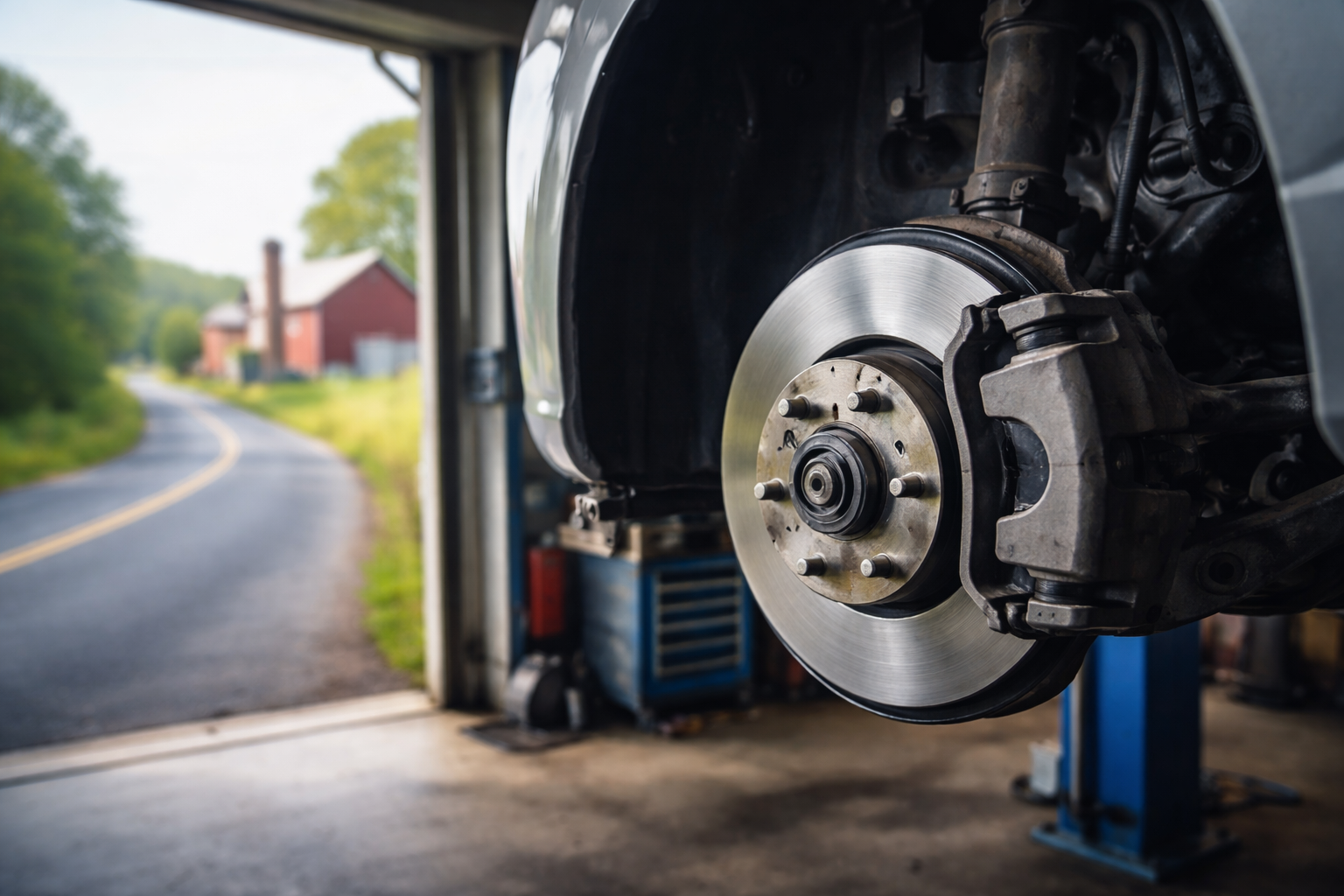
A modern vehicle braking system includes:
- Brake pads – The friction material that presses against the rotor to slow the vehicle
- Brake rotors – The metal discs attached to the wheels that absorb and dissipate heat
- Brake calipers – Hydraulic components that press the pads against the rotor
- Brake fluid – Hydraulic fluid that transfers pedal force into clamping pressure
- Master cylinder – Converts pedal movement into hydraulic pressure
- ABS module and sensors – Prevent wheel lockup during hard braking
Noise can originate from any of these components. It is also important to understand that front brakes typically handle a majority of the vehicle’s stopping force, which means they often wear faster than rear brakes. Rear brake systems — especially those integrated with electronic parking brakes — can present different wear patterns and service requirements.
In some cases, caliper slide pins can be cleaned and properly lubricated to restore smooth operation. In others, corrosion or internal seal damage makes caliper replacement the safer long-term solution. Identifying the difference requires hands-on inspection and measurement. While worn pads are common, sticking calipers, contaminated brake fluid, or uneven rotor surfaces can also create sound, vibration, or performance changes.
Understanding the system as a whole prevents misdiagnosis and ensures repairs address the root cause — not just the symptom.
Brake Warning Signs Beyond Noise: Pulsation, Pulling, Soft Pedal, and ABS Lights
Brake problems do not always start with squealing or grinding. Other symptoms drivers in Oley and Berks County should watch for include:
- Steering wheel or pedal pulsation – Often caused by rotor runout or thickness variation
- Vehicle pulling to one side during braking – May indicate a sticking caliper or uneven hydraulic pressure
- Soft or spongy brake pedal – Can signal air in the system or moisture-contaminated brake fluid
- Burning smell after driving – Possible dragging caliper or overheated brake components
- ABS warning light illuminated – Sensor, module, or hydraulic system issue
These symptoms can develop gradually. A vehicle that pulls slightly during braking today can become noticeably unstable during emergency stopping if caliper imbalance worsens. Addressing minor irregularities early protects both safety and component lifespan, helping prevent accelerated wear and maintain consistent stopping performance.
Brake Fluid Condition and Why It Matters in Oley, PA
Brake fluid is hygroscopic, meaning it absorbs moisture over time. Even a small percentage of water contamination can lower the fluid’s boiling point. During repeated braking — such as descending hills or driving rural roads with frequent stops — heat builds quickly.
If brake fluid reaches its boiling point, vapor can form in the system. Vapor compresses, which may result in a soft pedal or temporary brake fade.
In Pennsylvania’s humid climate and winter conditions, fluid contamination can occur gradually. Regular inspection and manufacturer-recommended fluid replacement intervals help maintain consistent pedal feel and braking reliability, especially in humid climates like southeastern Pennsylvania where moisture contamination can occur faster than many drivers expect.
How Often Should Brakes Be Inspected in Oley and Berks County?
Brake systems should be visually inspected at least once per year or every 10,000 to 15,000 miles, whichever comes first. Vehicles driven in rural conditions, exposed to road salt, or used for towing may benefit from more frequent checks.
Routine inspections help detect:
- Uneven front vs rear pad wear
- Early signs of caliper drag or sticking pistons
- Early rotor scoring
- Hardware corrosion
- Caliper slide restriction
- Fluid contamination
Catching wear early almost always reduces long-term repair cost and prevents unexpected performance loss.
Brake Repair Cost Drivers: Pads Only vs Pads and Rotors
Addressing brake noise early often limits repairs to brake pad replacement and hardware service. Many drivers looking for brake repair near Oley, PA are relieved to learn that early intervention can prevent more extensive rotor replacement. Once rotors fall below minimum thickness or become deeply scored, replacement becomes necessary rather than optional.
In practical terms, replacing pads alone is typically less involved than replacing pads and rotors together. Continued driving while grinding develops can increase overall repair cost and downtime.
Brake systems are engineered to dissipate heat efficiently. Once metal-on-metal contact begins, that heat accelerates wear across multiple components.
Oley and Berks County Driving Factors That Shorten Brake Pad Life
Brake pad life typically ranges from 30,000 to 70,000 miles depending on vehicle type and driving conditions. Drivers searching for brake pad replacement in Oley, PA often fall within this range depending on usage:
- Driving habits
- Vehicle weight
- Towing or hauling use
- Rural vs highway travel
- Exposure to salt and moisture
In Oley and surrounding rural communities, moderate speeds between intersections can generate more braking heat than steady highway cruising. Short trips and frequent cold starts also increase corrosion exposure.
Vehicles stored outdoors overnight often develop light rotor surface rust. This usually clears within a few stops. Persistent noise that continues once the system is warm is not considered normal.
What a Proper Brake Job Includes: Hardware Service, Torque Specs, and Safety Checks
Brake repair is not just about replacing parts. It involves ensuring the entire system functions correctly — hardware moving freely, tolerances within specification, and components torqued to manufacturer standards.
Vehicle design differences matter. A Ford F-150 has larger rotors and greater heat capacity than a compact Honda Civic. Integrated caliper designs and pad compound variations influence wear patterns and service procedures.
When brake issues are addressed early, drivers typically experience smoother braking, improved pedal feel, and more predictable stopping performance.
Qualifying brake repairs at Limitless Auto Center LLC are backed by a 3-year / 36,000-mile nationwide warranty, providing confidence whether driving locally in Oley or traveling beyond Pennsylvania. Drivers from Reading, Fleetwood, and surrounding Berks County communities frequently experience similar corrosion-related wear patterns due to regional climate conditions. Many local drivers reference their experience in documented customer feedback, where transparent diagnostics and clear communication are frequently mentioned.
Brake Noise FAQs: Squealing vs Grinding, Inspection Timing, and PA Inspection
Is it safe to drive with squealing brakes?
If the squeal is brief and only occurs during the first few stops on a damp morning, it may be surface rust and can be monitored. If squealing is consistent, occurs during every stop, or is accompanied by vibration or reduced braking confidence, inspection should be scheduled within a few days.
What does grinding mean when braking?
Grinding usually indicates metal-on-metal contact between the pad backing plate and rotor. Continuing to drive in this condition can quickly increase repair costs and compromise stopping distance, so it should be inspected immediately.
Will brake noise cause a Pennsylvania state inspection failure?
Yes. If pads are below minimum thickness or rotors are excessively worn or damaged, the vehicle may fail inspection. Brakes are a primary safety category during PA inspections.
How long do brake pads last in Oley, PA?
Brake pads generally last between 30,000 and 70,000 miles depending on driving patterns and vehicle weight. Rural driving habits and frequent braking can shorten lifespan.
Next Step: Schedule a Brake Noise Inspection in Oley, PA
If your brakes have started making noise, the safest next step is a professional brake inspection in Oley, PA. Whether you found us while searching for brake service near you or comparing local brake repair shops, a proper inspection provides clarity before repairs are authorized. You can schedule a brake inspection online in just a few minutes. Many brake repairs are straightforward when addressed early.
ASE-Certified technicians at Limitless Auto Center LLC inspect brake systems daily for drivers throughout Oley and surrounding communities. During inspection, you will receive clear measurements, an explanation of what those measurements mean, and guidance on whether service is urgent or can be scheduled.
As a locally owned NAPA AutoCare Center backed by a 3-year / 36,000-mile nationwide warranty, the goal is simple: provide accurate information so you can make an informed decision about your vehicle.
Safe stopping power begins with a properly inspected brake system — and early attention almost always protects both your vehicle and your wallet.
If you are unsure whether your brake noise is normal wear or early-stage damage, a quick inspection can provide clarity before a small issue becomes a larger repair.
About the Author and Our Automotive Credentials
This guide was written and reviewed by the team at Limitless Auto Center LLC, led by owner Josiah Martin. Since opening in March 2020, our shop has focused on education-first automotive service for drivers in Oley and throughout Berks County.
Our technicians are ASE-Certified professionals through the National Institute for Automotive Service Excellence and our facility operates as a NAPA AutoCare Center. That means repairs follow nationally recognized standards and qualifying services are backed by a 3-year / 36,000-mile nationwide warranty. We utilize digital vehicle inspections (DVI) to document measurements, wear patterns, and component condition so drivers can make informed decisions based on real data.
Brake system inspections, pad replacement, rotor measurement, and hardware service are performed daily in our Oley facility. The procedures described in this article reflect real-world diagnostic standards used in our shop — including millimeter pad measurements, rotor discard specification verification, and caliper hardware evaluation.
Community Involvement in Oley and Berks County
Limitless Auto Center LLC is locally owned and actively involved in the Oley community. Our team participates in events such as the Oley Fair and supports local youth organizations throughout the region. Being part of the community means our reputation depends on long-term trust, not short-term sales.
Drivers from Oley, Reading, Fleetwood, and surrounding towns rely on transparent communication, measurable diagnostics, and honest recommendations. That commitment to accountability is reflected in our customer feedback and long-term relationships.
Contact Limitless Auto Center LLC in Oley, PA
If you are experiencing brake noise or simply want peace of mind before your next trip, our team is ready to help.
Limitless Auto Center LLC
3350 Friedensburg Rd, Oley, PA 19547
Phone: (610) 987-3198
You can learn more about our services, view documented customer feedback, or connect with us on Facebook directly through our website.
Our shop is open Monday through Friday from 7:30 AM to 6:00 PM. Whether you are coming from Oley, Reading, Fleetwood, or surrounding Berks County communities, we are committed to providing accurate diagnostics, honest recommendations, and safe, reliable brake repair.