

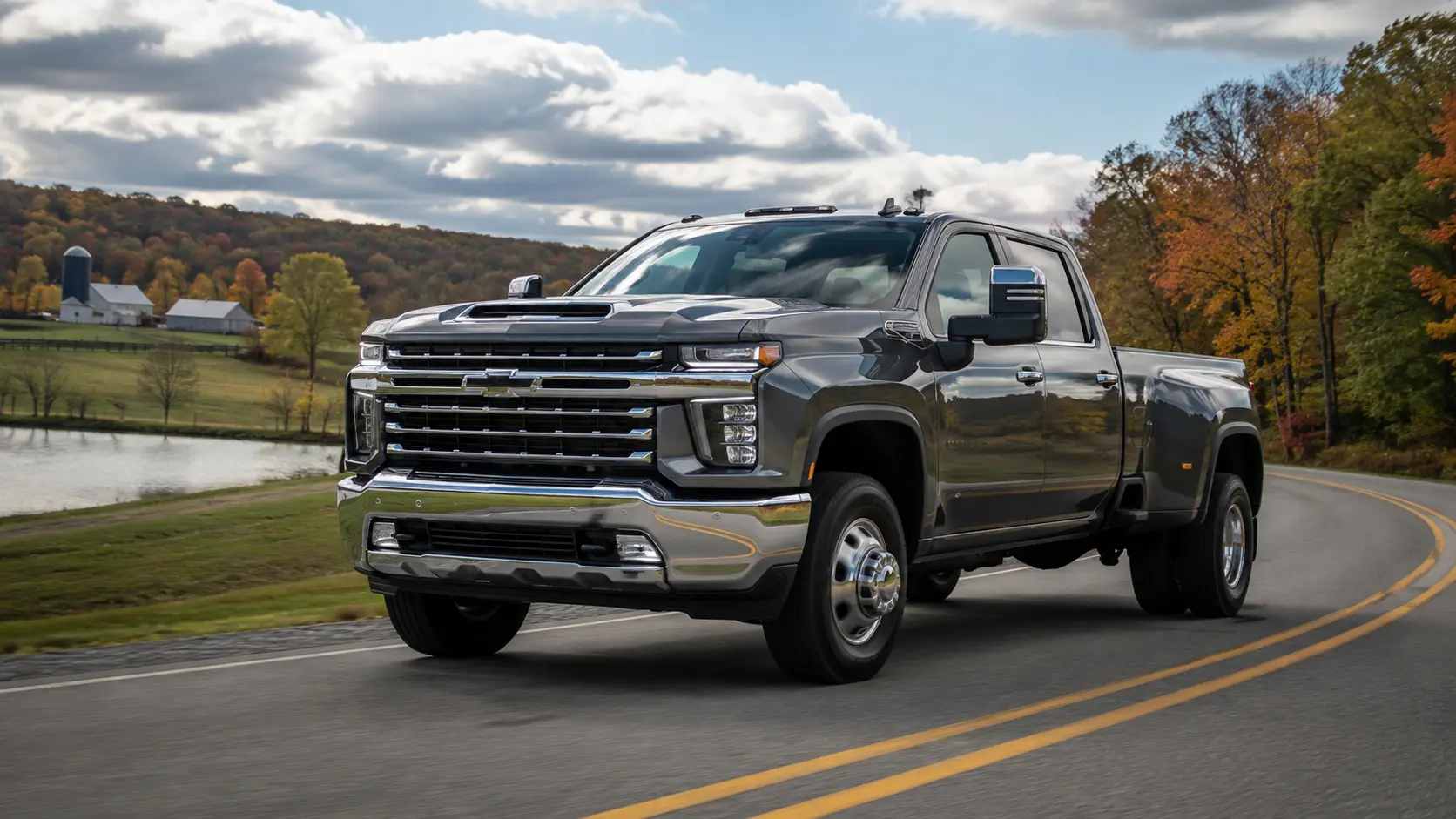
At Limitless Auto Center LLC in Oley, PA, we help drivers from Jacksonwald and throughout Berks County figure out what is actually causing a vehicle problem before parts are replaced based on assumptions. That matters with highway-speed vibration because two trucks can feel almost identical from the driver’s seat and still have completely different causes. General Motors has published technical guidance for a specific steering-wheel oscillation affecting certain 2020-2021 Chevrolet Silverado 2500HD and 3500HD trucks equipped with NV8 variable-assist steering, but the bulletin still requires the symptom to be diagnosed on the individual truck.
| Quick Answer: Certain applicable 2020-2021 Silverado 2500HD and 3500HD trucks can develop a quick steering-wheel oscillation or shake between approximately 50 and 80 mph. GM identifies high tire road-force variation, wheel and tire imbalance, and steering-gear calibration as possible contributors. Similar vibration can also come from unrelated mechanical problems, so the cause still has to be tested before a repair decision is made. |
Does Your Silverado HD Match the GM-Documented Steering Shake Condition?
Before assuming the bulletin applies, the first question is whether the truck and the symptom actually match the condition GM documented.
GM Service Bulletin 19-NA-240 covers certain 2020-2021 Chevrolet Silverado 2500HD and 3500HD trucks equipped with the NV8 variable-assist power steering system. The bulletin describes a steering dither, shake, or quick steering-wheel oscillation that may occur between approximately 50 and 80 mph.
That does not mean every Silverado HD from those years has the problem. A Silverado 1500 that shakes at 70 mph should not automatically be diagnosed from this bulletin. The same goes for a 2500HD that vibrates only while braking, a truck that shakes only under hard acceleration, or a vehicle that does not match the applicable steering configuration.
This is also a Technical Service Bulletin, not automatically a recall. A bulletin gives technicians guidance for a condition they may encounter. It does not prove that a particular truck has that condition just because the model year and symptom sound similar. Owners who are unsure whether their truck has an unrelated recall can check their VIN for open safety recalls.
Why Does a Silverado HD Steering Wheel Shake Only at Highway Speed?
Where and when the vibration happens are some of the first clues. If most of the movement is in the steering wheel, a technician may initially focus on components and forces affecting the front of the truck. If the vibration is stronger through the seat or floor, the diagnostic path may shift toward rear tire and wheel assemblies, other rotating components, or the driveline.
A truck that shakes while cruising steadily at 65 mph is a different complaint from one that vibrates only while accelerating. A shake that appears only while braking is different again. Tires, wheels, shafts, and other rotating parts produce forces that change with vehicle speed, and some problems become noticeable only within a narrow speed range because that is where the vibration is transmitted most strongly through the chassis or steering system.
This is why a driver saying, “It shakes around 65 mph but goes away below 55,” gives a technician far more useful information than simply saying, “The truck vibrates.”
Tire Road-Force Variation Is One GM-Documented Cause of Highway-Speed Steering Shake
A tire can be balanced and still create a vibration. Traditional balancing mainly addresses uneven weight distribution around the tire and wheel assembly. Road-force variation looks at how consistently the tire supports load as it rolls.
A tire is flexible. As the tread and sidewall rotate through the contact patch, different portions of the tire may deflect slightly differently. If one section is effectively stiffer than another, the force transmitted through the suspension can change with every revolution. That means a tire can have acceptable weight balance but still create a noticeable disturbance under load.
- Tire construction variation
- Temporary flat spotting
- Wheel runout
- Tire-to-wheel mounting position
- Improper centering during testing
- Wheel damage
- Irregular tread wear
GM identifies high tire road force as one possible contributor to the Silverado HD steering-wheel condition. A high road-force reading does not automatically mean the tire alone is defective. Wheel runout, how the tire is mounted on the wheel, and the relationship between the tire and wheel as an assembly can all affect the final measurement.
What people sometimes do not realize is that finding a tire or wheel concern does not automatically mean the first answer is replacement. Depending on what testing shows, a technician may need to determine whether the assembly is mounted correctly, whether the wheel contributes to the problem, or whether the tire itself is the source. Road-force variation is a technician-verified finding, not something a driver can diagnose from appearance alone.
Wheel and Tire Imbalance Can Also Cause Silverado Steering Wheel Vibration at 50-80 MPH
Wheel and tire imbalance is another possible cause identified in the GM bulletin. When the weight around the assembly is not distributed evenly, the force created as the wheel spins increases with speed. That is why a truck may feel smooth around town but develop a noticeable steering-wheel shake on the highway.
- Missing wheel weights
- Improper centering on balancing equipment
- Wheel damage
- Tire mounting issues
- Rust or debris affecting wheel seating
- Irregular tire wear
GM’s diagnostic information also directs attention to wheel and mounting conditions, including pilot-bore damage, rust, or contamination that can keep the assembly from sitting correctly. A wheel can also be properly balanced by weight and still have excessive radial or lateral runout, so technicians do not treat balance and wheel shape as the same measurement.
A recent tire balance does not automatically eliminate the tire and wheel assembly from consideration. The result depends on how the wheel was centered, how the assembly was measured, and whether the actual complaint was reproduced afterward. If the vibration started immediately after tire or wheel service, that timing is worth telling the technician.
Steering Gear Calibration Is Another Possible Cause Identified by GM
On applicable Silverado HD trucks, the NV8 variable-assist steering system combines mechanical steering components with electronic control. GM identifies steering-gear calibration that is not optimized as another possible contributor to the documented condition.
Calibration should not be assumed to be the answer simply because the truck falls within the model-year range. If tire and wheel testing points elsewhere, that evidence matters more than the existence of a bulletin. Modern vehicle diagnosis often means deciding whether the source is mechanical, tire-related, electronic, or a combination of systems.
Technicians Diagnose a Silverado HD Steering Wheel Shake by Reproducing the Exact Symptom
There is no single fixed sequence for every vibration complaint. The driver’s description determines where the technician starts.
Consider two Silverado HD trucks that both arrive with the same complaint: “The steering wheel shakes around 65 mph.” On the first truck, the technician confirms the shake is strongest in the steering wheel while cruising and does not change when braking. Tire and wheel testing may then reveal a problem within one front assembly.
The second truck may feel different once it is road-tested. If most of the vibration comes through the floor and gets stronger under acceleration, the technician may move away from the tire-and-steering path and begin evaluating driveline components instead. The customer description sounds nearly identical, but the operating conditions point the diagnosis in different directions.
- Listening carefully to the driver’s description
- Identifying the exact speed range
- Determining whether the symptom changes during acceleration, cruise, coasting, or braking
- Identifying where the vibration is felt
- Road-testing the truck
- Inspecting tire condition and pressure
- Checking wheel condition and mounting surfaces
- Evaluating balance
- Measuring road-force variation when appropriate
- Inspecting steering and suspension components
- Expanding the diagnosis if the evidence points toward brakes or driveline components
- Verifying the repair with another road test
Not every vibration shows up immediately. A truck that shakes only after the tires warm up, only while loaded, or only within a narrow speed range may require more than one road test to reproduce accurately. That does not automatically mean the problem is unusual. It means the technician has to recreate the conditions the driver experiences.
At Limitless Auto Center, that fits the shop’s broader diagnosis-first approach: identify the problem, explain the findings, and let the customer make an informed decision.
Silverado Vibration Location and Timing Help Narrow the Diagnosis
The table below is a starting point, not a diagnosis.
| Symptom | Possible Diagnostic Direction |
|---|---|
| Steering wheel shakes around 50-80 mph | Tire, wheel, and steering evaluation |
| Vibration is stronger through the seat or floor | Rear tire and wheel assemblies, driveline components, or other rotating parts may need evaluation |
| Truck shakes mainly while braking | Brake and hub system evaluation |
| Vibration occurs mainly under acceleration | Driveline or powertrain evaluation |
| Steering wheel is off-center | Alignment or steering evaluation |
| Truck pulls without noticeable vibration | Tire, alignment, brake, steering, or suspension evaluation |
If the truck matches the bulletin on paper but the actual vibration happens only during braking or hard acceleration, that is a good reason not to force the diagnosis into the bulletin. The table only suggests where testing may begin. Inspection and measurement still have to establish the cause.
A Wheel Alignment Will Not Fix Every Silverado HD Steering Wheel Shake
A steering-wheel vibration does not automatically mean the truck needs an alignment. An alignment adjusts the angles at which the wheels sit and travel relative to the vehicle and road. At a practical level, improper alignment can contribute to pulling, an off-center steering wheel, or certain tire-wear patterns.
- An out-of-balance tire and wheel assembly
- Excessive tire road-force variation
- A bent wheel
- A damaged tire
- Improper wheel seating
- A steering calibration issue
Alignment can still be appropriate if measurements show the wheel angles are out of specification, especially if the truck also pulls or has irregular tire wear. The important distinction is that alignment should be recommended because the measurements justify it, not simply because the steering wheel shakes.
There can also be some overlap. Poor alignment can create abnormal tire wear, and that worn tire may later contribute to vibration. Correcting the alignment would address the geometry problem, but it may not make an already damaged or irregularly worn tire smooth again. That distinction is why tire service and wheel alignment should be based on what inspection and measurements actually show.
Other Mechanical Problems Can Feel Similar to the GM-Documented Silverado HD Steering Shake
It is important to separate what GM actually documents from other problems that can produce a similar sensation.
GM-Documented Possible Contributors
- High tire road-force variation
- Out-of-balance tire and wheel assemblies
- Steering-gear calibration that is not optimized
Other Problems Can Produce Similar Vibration
- Damaged tires
- Bent wheels
- Worn steering components
- Suspension looseness
- Wheel-bearing concerns
- Brake-related vibration
- Driveline vibration
- Driveshaft or joint concerns
- Engine or transmission problems under load
These broader possibilities are not additional causes listed in the GM bulletin. If the truck fits the bulletin by year and configuration but the actual symptom appears only during braking or hard acceleration, that is a strong reason to follow the evidence instead of forcing the complaint into a predetermined repair path.
Is It Safe to Drive a Silverado HD With a Shaking Steering Wheel?
How urgent the problem is depends on what is actually causing the vibration. Arrange an inspection sooner if:
- The vibration becomes sudden or severe
- Steering control changes
- The truck pulls sharply
- A tire appears damaged or bulged
- Tire pressure drops quickly
- A wheel appears damaged
- Braking behavior changes
- Grinding or heavy clunking develops
- The vibration gets worse quickly
A mild, repeatable highway-speed vibration with otherwise normal steering does not automatically mean the truck has a major failure. It still deserves diagnosis. Avoid repeatedly driving at high speed just to test the symptom. Instead, document when it happens and schedule an inspection.
Expert Tip: Record the Exact Conditions When Your Silverado Steering Wheel Starts Shaking
One of the most useful things a driver can do is describe the vibration precisely. Before your appointment, note:
- The speed where the shake begins
- The speed where it is strongest
- The speed where it fades
- Whether you are accelerating, cruising, or coasting
- Whether braking changes it
- Whether it is felt mainly in the steering wheel, seat, or floor
- Whether the truck is loaded or towing
- Whether the symptom started after tire service or wheel removal
- Whether there was a recent pothole or curb impact
- Whether tire pressure changed
- Whether any warning lights appeared
- Whether the vibration is accompanied by noise or pulling
For Silverado HD owners who tow, carry tools, haul equipment, or spend a lot of time at highway speed around Berks County, it is especially useful to note whether the vibration changes with payload.
A technician can work with: “My steering wheel starts shaking around 58 mph and is strongest around 67. It does not get worse when I brake, and I barely feel it in the seat.” That is much more useful than: “I think I need an alignment.”
Limitless Auto Center Uses Digital Vehicle Inspections to Help Explain Vibration Findings
A Digital Vehicle Inspection can help document what a technician sees, but it does not replace the measurements needed to diagnose a vibration. For example, a photo of uneven tire wear can help explain why a technician is concerned about tire or alignment condition, but it cannot tell you whether that tire has excessive road-force variation.
Likewise, a DVI may document visible steering or suspension wear, while the road test and other measurements determine whether those findings are actually responsible for the shake. Limitless Auto Center also reviews Carfax maintenance history when relevant. That may provide context, such as recent tire or alignment service, but maintenance history alone cannot prove the current cause. The shop’s process is straightforward: Identify the problem. Explain the findings. Let the customer make an informed decision.
What Does It Cost to Fix a Silverado HD Steering Wheel Shake?
There is no useful one-price answer because the repair depends entirely on the cause. A balance-related correction, a damaged tire or wheel, an alignment issue, and a steering-system concern are very different repairs. The same symptom can therefore lead to very different costs.
Even when two trucks need the same general type of service, cost can differ based on tire size, wheel condition, whether multiple assemblies are involved, and whether another steering or suspension concern is discovered during inspection. That is why quoting a vibration repair accurately usually requires seeing the truck first.
A meaningful estimate comes after the vibration has been reproduced and the source has been identified.
Frequently Asked Questions About Silverado HD Steering Wheel Shake
Why does my 2020 or 2021 Silverado HD shake between 50 and 80 mph?
Certain 2020-2021 Silverado 2500HD and 3500HD trucks equipped with the applicable NV8 variable-assist steering system are covered by a GM bulletin addressing steering-wheel shake or quick oscillation in the 50-80 mph range. GM identifies high road force, tire and wheel imbalance, and steering calibration as possible contributors.
Does the GM bulletin mean every Silverado HD has this problem?
No. It applies to specific vehicles and a specific type of symptom. Every truck still has to be diagnosed individually.
Is the Silverado HD steering shake a recall?
No. GM 19-NA-240 is a Technical Service Bulletin, not automatically a safety recall.
Will balancing the tires fix the steering wheel shake?
Maybe. If imbalance is the actual cause, balancing may correct it. But if the truck has excessive road-force variation, wheel damage, steering issues, or another mechanical problem, balancing alone will not solve it.
What is road-force balancing?
Road-force testing evaluates how the tire and wheel assembly behaves under load. It can reveal force variation that a conventional balance may not identify.
Will an alignment fix a Silverado steering wheel vibration?
Only if an alignment problem is actually part of the cause. Alignment does not repair an out-of-balance tire, excessive road-force variation, a bent wheel, or a damaged tire.
Why does the vibration only happen at highway speed?
Some rotating components create their strongest vibration within a particular speed range. That is why knowing the exact speed where the shake starts can help narrow the diagnosis.
Can towing or payload change how the vibration feels?
Yes. Loading can change how forces move through the tires, suspension, steering, and driveline. Tell the technician if the symptom changes when the truck is loaded.
Should I replace my tires if the steering wheel shakes?
Not just because it shakes. The tires should first be inspected and tested to determine whether they are actually responsible.
Can a bent wheel cause the same symptom?
Yes, a damaged wheel can contribute to vibration. Testing is still needed to prove that it is the source.
Can I diagnose my truck using the GM bulletin myself?
The bulletin can help you understand the condition, but it cannot replace a road test, tire and wheel measurements, or a professional inspection.
Schedule Silverado HD Tire, Wheel and Steering Diagnosis Near Jacksonwald, PA
If your 2020 or 2021 Silverado 2500HD or 3500HD develops a steering-wheel shake between 50 and 80 mph, the next step is to find out what is actually causing it.
Limitless Auto Center LLC provides tire service, wheel alignment, steering and suspension service, general diagnostics, and Digital Vehicle Inspections for drivers throughout Jacksonwald and the surrounding Berks County area. Drivers looking for auto repair near Jacksonwald can have the truck evaluated based on the actual symptom and inspection findings rather than assuming it needs an alignment, new tires, or steering parts.
Qualifying repairs are backed by the shop’s 3-year/36,000-mile warranty.
If your Silverado HD has developed a highway-speed vibration, call (610) 987-3198 or visit Limitless Auto Center at 3350 Friedensburg Rd, Oley, PA 19547 to have the tires, wheels, steering, and related systems evaluated before parts are replaced. Follow us on Facebook for shop updates and automotive information.

Josiah Martin has 15 years of automotive experience and has been a shop owner for 6 years. He is an ASE Master Certified Mechanic with certifications in Hybrid Vehicles, Advanced Engine Performance, and HVAC.